Every few months there's another headline about autonomous ships. Should you be worried about your job? Let's look at the reality.
What's Actually Happening
Yes, automation is coming. But it's not happening overnight:
- Ports are increasingly automated (fewer traditional stevedore roles)
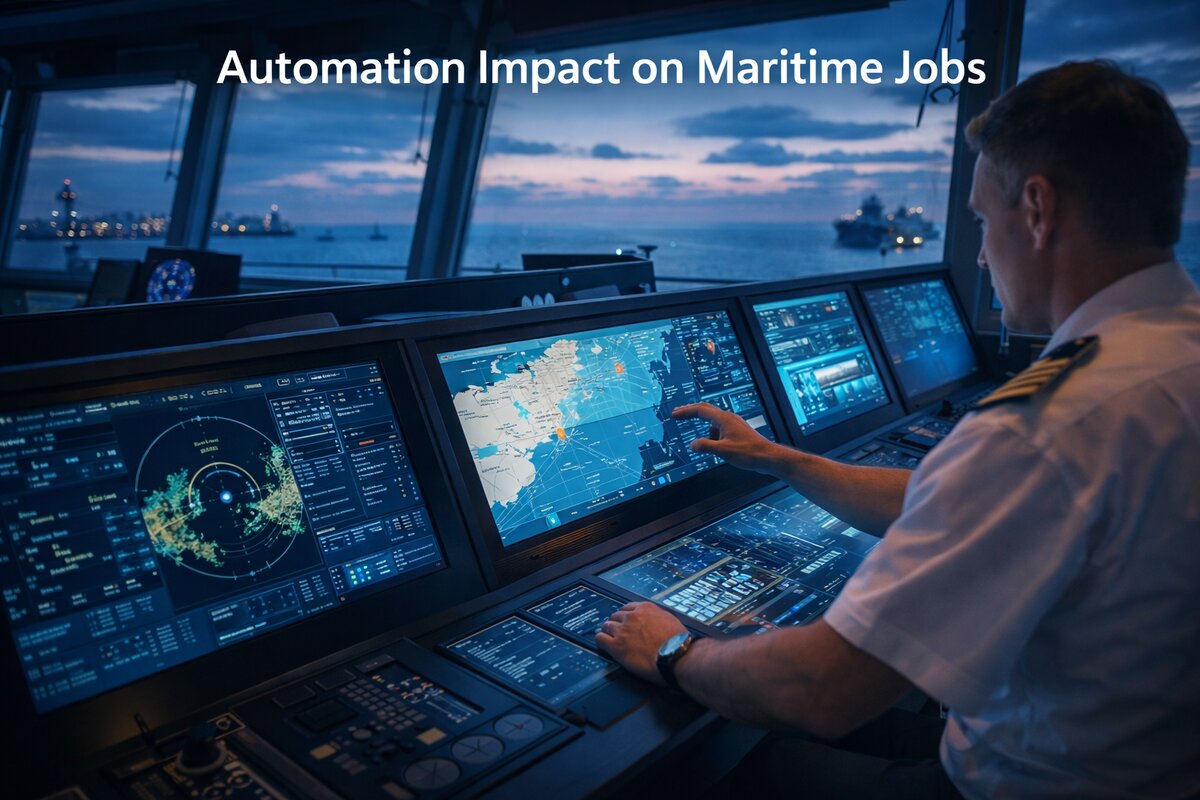
- Engine rooms are more monitored, less manually operated
- Navigation systems are getting smarter
- Administrative tasks are being digitized
What's Not Happening (Yet)
Fully autonomous ocean-going vessels are still far off. Why?
- Regulatory frameworks aren't ready
- Insurance and liability issues are complex
- Ships need humans for emergencies and port operations
- The technology isn't foolproof for open ocean conditions
Jobs at Risk
- Routine data entry and documentation
- Basic monitoring tasks
- Traditional port labor
- Some entry-level administrative roles
Jobs Growing
- Remote operations specialists
- Data analysts
- Cybersecurity experts
- Technical specialists for new systems
- Software developers for maritime applications
How to Prepare
- Get comfortable with technology. Learn the digital tools used in your field.
- Develop skills machines can't replace. Problem-solving, relationship management, complex decision-making.
- Stay updated. Follow industry trends, understand what's coming.
- Be adaptable. The specific job you have today might not exist in 10 years - but your skills will still be valuable in new roles.
The maritime industry will always need people. The question is what those jobs will look like. Position yourself for the change rather than fearing it.