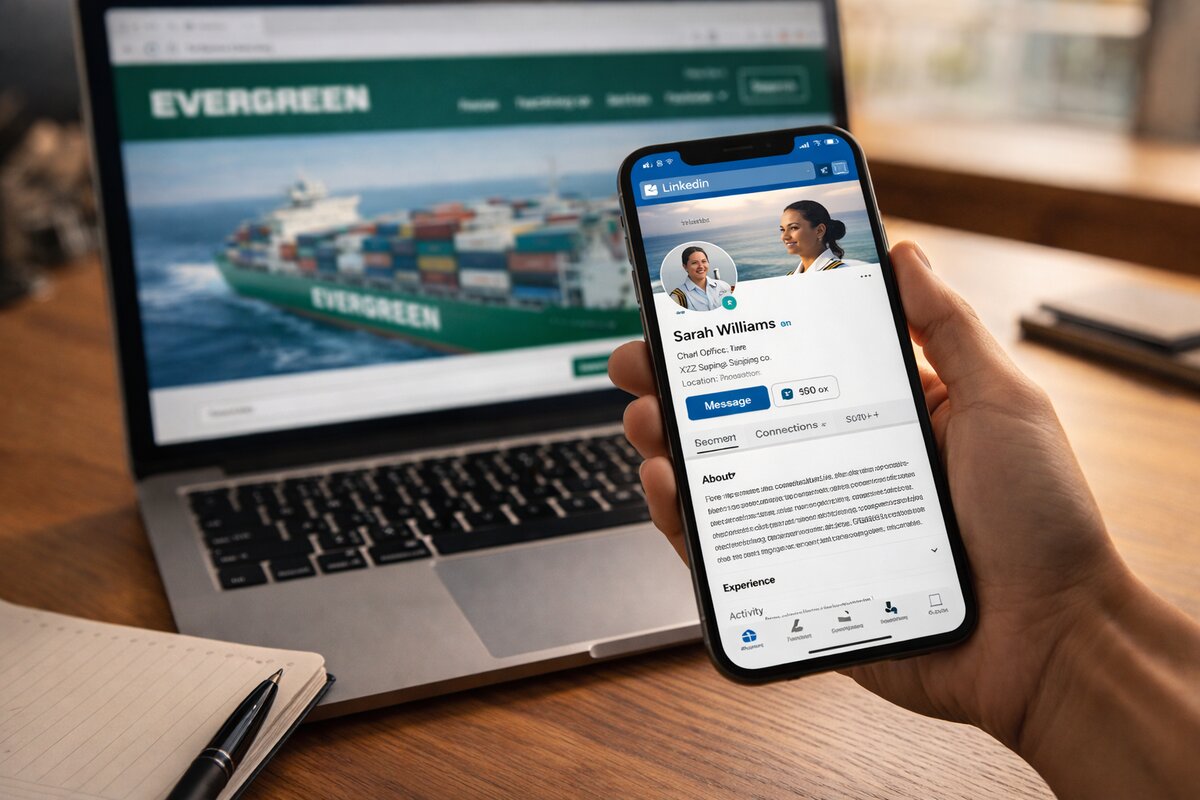
Recruiters will check your LinkedIn. Hiring managers will check your LinkedIn. Make sure what they find helps rather than hurts you.
Profile Photo
Professional headshot. Not a photo from a party. Not a photo in your boiler suit. Business casual, good lighting, plain background. This isn't Instagram.
Headline
Don't just use your job title. Add context:
Instead of: "Operations Manager"
Try: "Operations Manager | Dry Bulk & Tankers | 10 Years in Ship Operations"
Include keywords recruiters search for.
About Section
Write in first person. Keep it to 3-4 short paragraphs:
- What you do and your expertise
- Key achievements or specializations
- What you're looking for (if open to opportunities)
Avoid buzzwords like "passionate" and "driven." Show, don't tell.
Experience Section
- Include company descriptions (not everyone knows every shipping company)
- Add bullet points with achievements, not just responsibilities
- Quantify where possible (fleet size, cargo volumes, team size)
- For sea experience, include vessel types and trading areas
Quick Wins
- Custom URL (linkedin.com/in/yourname)
- Complete all sections (LinkedIn favors complete profiles)
- Add a background image (something maritime-related)
- Request recommendations from colleagues
- List relevant skills and get endorsements
Activity
An inactive profile looks abandoned. You don't need to post daily, but:
- Share relevant industry news occasionally
- Comment thoughtfully on others' posts
- Congratulate connections on achievements
Open to Work?
LinkedIn has a feature to signal you're open to opportunities. You can make this visible to recruiters only if you don't want your current employer to know.
Your LinkedIn profile works for you 24/7. Invest an hour to get it right.